For private individuals
Luxembourg: Country Overview
Welcome to the Grand Duchy, the Centre of Europe
A small country that is home to one of the three capitals of the European Union, with a stable and prosperous economy. Almost one resident in two comes from abroad.
- 691,000inhabitants on 1 January 2026
- 47%foreign nationals, nearly 70% in the capital
- 237,200cross-border commuters every day
- 3administrative languages, English at work
Source: luxembourg.public.lu, Demographics, read on 29 September 2026.
Luxembourg in Figures
-
Nearly 691,000 inhabitants
on 1 January 2026, on 2,586 km2: one of the most densely populated areas of Europe, with 267 inhabitants per km2.
-
Almost 47% of foreign nationals
and nearly 70% in Luxembourg City, the most cosmopolitan capital of the European Union.
-
237,200 cross-border commuters
come to work every day from France, Belgium and Germany, on top of the resident population.
-
Three administrative languages
Luxembourgish, French and German; English is widely spoken at work, alongside Portuguese and Italian.
-
Life expectancy of 81 and 85 years
for men and women respectively.
-
137,700 people in Luxembourg City
the capital and largest city, seat of several institutions of the European Union.
Source: luxembourg.public.lu, Demographics (population on 1 January 2026) and luxembourg.public.lu, What languages do people speak in Luxembourg?, official portal of the Grand Duchy, read on 29 September 2026.
The Grand Duchy of Luxembourg
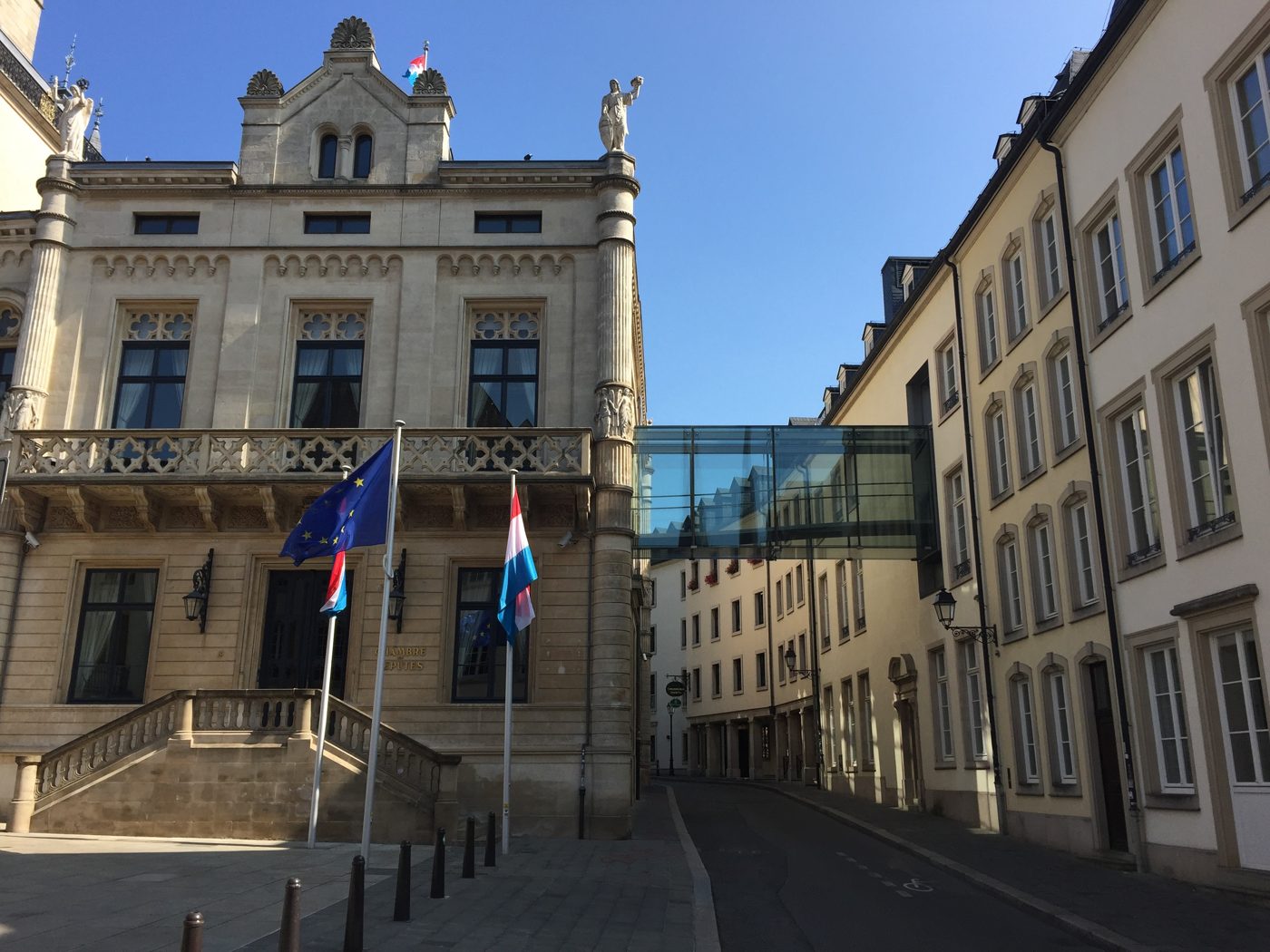
Luxembourg is a landlocked country in western Europe, bordered by Belgium to the west and north, Germany to the east and France to the south. Its capital, Luxembourg City, is together with Brussels and Strasbourg one of the three official capitals of the European Union and the seat of the Court of Justice of the European Union.
Its culture, people and languages are closely intertwined with those of its neighbours, a blend of French and Germanic influences. The invasions it suffered, especially in the Second World War, shaped the country's strong will for mediation between France and Germany and its role in the foundation of the European Union.
Luxembourg is a representative democracy with a constitutional monarch, the Grand Duke, and the world's only remaining grand duchy. It is a developed country with an advanced economy and one of the highest levels of gross domestic product per capita in the world.
Quality of Life
Luxembourg is known for its quality of living. International surveys, including the Mercer Quality of Living survey, regularly confirm that Luxembourg is an agreeable place to live. Wages and the standard of living are high, the cultural life is rich for a country of this size, and the country is secure, with great political stability and low levels of corruption and crime.
Luxembourg performs well in many measures of well-being in the OECD Better Life Index: above average in income and wealth, social connections, civic engagement, jobs and earnings, work-life balance, personal security, subjective well-being, health, environmental quality and housing.
Sources: Mercer, Quality of Living city rankings and OECD Better Life Index, Luxembourg, as quoted on the current LuxRelo site; rankings change every year, check the latest edition.
Why so Many People Choose Luxembourg
-
A stable, open economy
Luxembourg is a founding member of the European Union, the OECD, the United Nations, NATO and Benelux, with a long tradition of political stability.
-
The centre of Europe
Bordered by Belgium, Germany and France, two hours by train from Paris and Brussels, with Frankfurt and Amsterdam within easy reach.
-
A capital of the European Union
Luxembourg City is, with Brussels and Strasbourg, one of the three official capitals of the European Union and the seat of the Court of Justice of the European Union.
-
Multilingual daily life
Administrations may be addressed in French, German or Luxembourgish; in practice, English is enough in most situations at work and in everyday life.
-
Two regions in one small country
The Oesling in the north, part of the Ardennes, and the Gutland in the south, with the capital, the Moselle vineyards and the industrial south.
-
A safe place to raise a family
Low crime, high standards of healthcare and public services, and a wide choice of international schools.
If you are moving here, we can help with the home search, administrative procedures and settling in.